


River cruise · 22.09.2026 – 04.10.2026 · 12 nights
From Berlin To Belgium’s Heartland
Route and cruise information
Premium- Berlin
- Potsdam
- Berlin
- Brandenburg
- Genthin
- Potsdam
- Rothensee
- Haldensleben I
- Wolfsburg
- Genthin
- Hanover Vahrenwald
- Wolfsburg
- Minden
- Munster
- Duisburg Ruhrort
- Sneek
- Franeker
- Utrecht
- Brussels
- Brussels
| Date | Port | Arrival | Departure |
|---|---|---|---|
| 22.09.2026 |
Berlin
Germany
|
— | — |
| 23.09.2026 |
Potsdam
Germany
|
14:00 | — |
| 23.09.2026 |
Berlin
Germany
|
— | 12:00 |
| 24.09.2026 |
Brandenburg
Germany
|
12:30 | 17:00 |
| 24.09.2026 |
Genthin
Germany
|
22:30 | — |
| 24.09.2026 |
Potsdam
Germany
|
— | 08:00 |
| 25.09.2026 |
Rothensee
Germany
|
10:00 | 10:30 |
| 25.09.2026 |
Haldensleben I
|
12:30 | 13:30 |
| 25.09.2026 |
Wolfsburg
Germany
|
19:30 | — |
| 25.09.2026 |
Genthin
Germany
|
— | 04:30 |
| 26.09.2026 |
Hanover Vahrenwald
|
13:00 | 19:00 |
| 26.09.2026 |
Wolfsburg
Germany
|
— | 02:00 |
| 27.09.2026 |
Minden
Germany
|
01:00 | 15:00 |
| 28.09.2026 |
Munster
Germany
|
07:00 | 16:30 |
| 29.09.2026 |
Duisburg Ruhrort
|
07:30 | 13:30 |
| 30.09.2026 |
Sneek
|
15:00 | 22:00 |
| 01.10.2026 |
Franeker
|
05:00 | 16:30 |
| 02.10.2026 |
Utrecht
Netherlands
|
07:00 | 13:00 |
| 03.10.2026 |
Brussels
Belgium
|
08:00 | — |
| 04.10.2026 |
Brussels
Belgium
|
— | — |
-
 Day 1:
Berlin / Germany
Berlin is the capital and largest city of Germany, by both area and population. With 3.7 million inhabitants, it has the highest population within its city limits of any city in the European Union. The city is also one of the states of Germany, being the third smallest state in the country by area. Berlin is surrounded by the state of Brandenburg, and Brandenburg's capital Potsdam is nearby. The urban area of Berlin has a population of over 4.6 million and is therefore the most populous urban area in Germany.The Berlin-Brandenburg capital region has around 6.2 million inhabitants and is Germany's second-largest metropolitan region after the Rhine-Ruhr;region,as well as the fifth-biggest metropolitan region by GDP in the European Union.
-
 Day 2: 14:00
Potsdam / Germany
-
Day 2: 12:00
Berlin / Germany
Berlin is the capital and largest city of Germany, by both area and population. With 3.7 million inhabitants, it has the highest population within its city limits of any city in the European Union. The city is also one of the states of Germany, being the third smallest state in the country by area. Berlin is surrounded by the state of Brandenburg, and Brandenburg's capital Potsdam is nearby. The urban area of Berlin has a population of over 4.6 million and is therefore the most populous urban area in Germany.The Berlin-Brandenburg capital region has around 6.2 million inhabitants and is Germany's second-largest metropolitan region after the Rhine-Ruhr;region,as well as the fifth-biggest metropolitan region by GDP in the European Union.
-
 Day 3: 12:30–17:00
Brandenburg / Germany
-
 Day 3: 22:30
Genthin / Germany
The ancient streets, surrounded by forests and fields, invite you on a journey where peace and history blend into a single rhythm. Far from the noise of the big cities, it's easy to lose track of time here, strolling along well-maintained alleys, observing the calm life of the locals, and feeling the atmosphere of true German countryside.
Genthin, located in the state of Saxony-Anhalt, was once an important fortification point and still retains architectural traces of its past. The Genthin Castle and the water tower are of particular interest, offering picturesque panoramas. Lovers of leisurely walks, bike routes, and rural tourism will truly appreciate this quiet corner of Germany.
-
Day 3: 08:00
Potsdam / Germany
-
 Day 4: 10:00–10:30
Rothensee / Germany
One of the most picturesque corners of Germany, Rothensee offers a unique combination of natural beauty and historical atmosphere. It is the perfect place for those seeking peace and solitude away from the hustle and bustle of the city. The stunning lake, surrounded by green meadows and forests, attracts tourists with its opportunities for hiking, fishing, and water sports.
In addition, Rothensee is known for its history and architectural landmarks, including ancient mills and bridges that remind visitors of the region's rich past. Local cafes and restaurants offer a relaxing atmosphere with lake views, as well as traditional dishes that immerse you in the ambiance of a true German village.
-
Day 4: 12:30–13:30
Haldensleben I
-
 Day 4: 19:30
Wolfsburg / Germany
-
Day 4: 04:30
Genthin / Germany
The ancient streets, surrounded by forests and fields, invite you on a journey where peace and history blend into a single rhythm. Far from the noise of the big cities, it's easy to lose track of time here, strolling along well-maintained alleys, observing the calm life of the locals, and feeling the atmosphere of true German countryside.
Genthin, located in the state of Saxony-Anhalt, was once an important fortification point and still retains architectural traces of its past. The Genthin Castle and the water tower are of particular interest, offering picturesque panoramas. Lovers of leisurely walks, bike routes, and rural tourism will truly appreciate this quiet corner of Germany.
-
Day 5: 13:00–19:00
Hanover Vahrenwald
-
Day 5: 02:00
Wolfsburg / Germany
-
 Day 6: 01:00–15:00
Minden / Germany
-
Day 7: 07:00–16:30
Munster / Germany
-
Day 8: 07:30–13:30
Duisburg Ruhrort
-
Day 9: 15:00–22:00
Sneek
-
Day 10: 05:00–16:30
Franeker
-
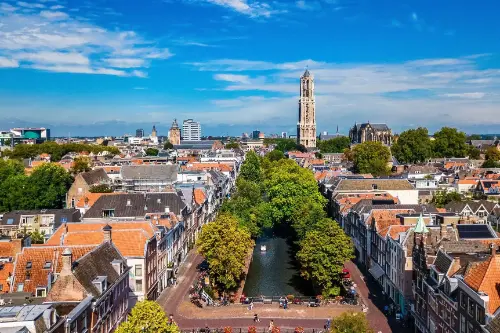 Day 11: 07:00–13:00
Utrecht / Netherlands
Utrecht is the fourth-largest city and a municipality of the Netherlands, capital and most populous city of the province of Utrecht. It is located in the eastern corner of the Randstadconurbation, and in the very centre of mainland Netherlands, and had a population of 345,080 in 2017.
Utrecht's ancient city centre features many buildings and structures several dating as far back as the High Middle Ages. It has been the religious centre of the Netherlands since the 8th century. It lost the status of prince-bishopric but remains the main religious centre in the country. Utrecht was the most important city in the Netherlands until the Dutch Golden Age, when it was surpassed by Amsterdam as the country's cultural centre and most populous city.
Utrecht is host to Utrecht University, the largest university in the Netherlands, as well as several other institutions of higher education. Due to its central position within the country, it is an important transport hub for both rail and road transport. It has the second highest number of cultural events in the Netherlands, after Amsterdam. In 2012, Lonely Planet included Utrecht in the top 10 of the world’s unsung places.
-
 Day 12: 08:00
Brussels / Belgium
Brussels , officially the Brussels-Capital Region is a region of Belgiumcomprising 19 municipalities, including the City of Brussels, which is the capital of Belgium. The Brussels-Capital Region is located in the central portion of the country and is a part of both the French Community of Belgium and the Flemish Community, but is separate from the Flemish Region (in which it forms an enclave) and the Walloon Region. Brussels is the most densely populated and the richest region in Belgium in terms of GDP per capita. It covers 161 km2 (62 sq mi), a relatively small area compared to the two other regions, and has a population of 1.2 million. The metropolitan area of Brussels counts over 2.1 million people, which makes it the largest in Belgium. It is also part of a large conurbation extending towards Ghent, Antwerp, Leuven and Walloon Brabant, home to over 5 million people.
Brussels grew from a small rural settlement on the river Senne to become an important city-region in Europe. Since the end of the Second World War, it has been a major centre for international politics and the home of numerous international organisations, politicians, diplomats and civil servants. Brussels is the de facto capital of the European Union, as it hosts a number of principal EU institutions (the two other capitals are Luxembourg and Strasbourg) and its name is sometimes used metonymically to describe the EU and its institutions.The secretariat of the Benelux and headquarters of NATO are also located in Brussels. As the economic capital of Belgium and one of the top financial centres of Western Europe with Euronext Brussels, it is classified as an Alpha global city. Brussels is a hub for rail, road and air traffic, sometimes earning the moniker "Crossroads of Europe". The Brussels Metrois the only rapid transit system in Belgium. In addition, both its airport and railway stations are the largest and busiest in the country.
Historically Dutch-speaking, Brussels saw a language shift to French from the late 19th century. The Brussels-Capital Region is officially bilingual in French and Dutch, even though French is now the de facto main language with over 90% of the population speaking it. Brussels is also increasingly becoming multilingual. English is spoken as a second language by nearly a third of the population and a large number of migrants and expatriates speak other languages.
Brussels is known for its cuisine and gastronomy, as well as its historical and architectural landmarks; some of them are registered as UNESCO World Heritage sites. Main attractions include its historic Grand Place, Manneken Pis, Atomium, and cultural institutions such as La Monnaie and the Museums of Art and History. It is also a capital of the comic strip.
-
Day 13:
Brussels / Belgium
Brussels , officially the Brussels-Capital Region is a region of Belgiumcomprising 19 municipalities, including the City of Brussels, which is the capital of Belgium. The Brussels-Capital Region is located in the central portion of the country and is a part of both the French Community of Belgium and the Flemish Community, but is separate from the Flemish Region (in which it forms an enclave) and the Walloon Region. Brussels is the most densely populated and the richest region in Belgium in terms of GDP per capita. It covers 161 km2 (62 sq mi), a relatively small area compared to the two other regions, and has a population of 1.2 million. The metropolitan area of Brussels counts over 2.1 million people, which makes it the largest in Belgium. It is also part of a large conurbation extending towards Ghent, Antwerp, Leuven and Walloon Brabant, home to over 5 million people.
Brussels grew from a small rural settlement on the river Senne to become an important city-region in Europe. Since the end of the Second World War, it has been a major centre for international politics and the home of numerous international organisations, politicians, diplomats and civil servants. Brussels is the de facto capital of the European Union, as it hosts a number of principal EU institutions (the two other capitals are Luxembourg and Strasbourg) and its name is sometimes used metonymically to describe the EU and its institutions.The secretariat of the Benelux and headquarters of NATO are also located in Brussels. As the economic capital of Belgium and one of the top financial centres of Western Europe with Euronext Brussels, it is classified as an Alpha global city. Brussels is a hub for rail, road and air traffic, sometimes earning the moniker "Crossroads of Europe". The Brussels Metrois the only rapid transit system in Belgium. In addition, both its airport and railway stations are the largest and busiest in the country.
Historically Dutch-speaking, Brussels saw a language shift to French from the late 19th century. The Brussels-Capital Region is officially bilingual in French and Dutch, even though French is now the de facto main language with over 90% of the population speaking it. Brussels is also increasingly becoming multilingual. English is spoken as a second language by nearly a third of the population and a large number of migrants and expatriates speak other languages.
Brussels is known for its cuisine and gastronomy, as well as its historical and architectural landmarks; some of them are registered as UNESCO World Heritage sites. Main attractions include its historic Grand Place, Manneken Pis, Atomium, and cultural institutions such as La Monnaie and the Museums of Art and History. It is also a capital of the comic strip.
VIVA All-Inclusive
Breakfast, Lunch, Dinner
Full board: breakfast buffet, lunch and dinner (gourmet menus served at the table) plus snacks. Free choice of table and flexible meal times.
Drinks all day
Hot and cold non-alcoholic beverages, plus a selection of alcoholic drinks. See bar menu for details.
High Tea
Once per trip: sweet and savory treats — scones, sandwiches, cupcakes, chocolates, macarons. Variety of teas included.
Welcome Drink
A warm welcome with a glass of champagne — to a wonderful stay on board.
RITUALS Beauty Products
Selected products for care and relaxation.
Minibar and Water Bottle
Daily replenished minibar and reusable bottle in the cabin.
Wi-Fi on board
Free and stable internet for comfortable use.
Tips included
All crew services are included in the price.
As of 01.11.2026
Payment
A 30% deposit is required at the time of booking.
Final payment must be made no later than 60 days before the cruise starts.
Cancellation
More than 120 days before departure – 10% of the total cost.
119–90 days – 20%.
89–30 days – 40%.
29–15 days – 60%.
14–1 day – 80%.
On the day of departure – 100%.
Rebooking
Changes to the booking are possible no later than 90 days before the cruise starts.
Fee – 50 EUR per person.
Passenger substitution
Allowed no later than 9 days before the cruise starts.
Fee – 50 EUR.
Prices are quoted in EUR — roughly 1 EUR ≈ 52,20 ₴ at the exchange rate on the day of booking
As of 03.11.2026
Still have a question?
We'll help you choose a cruise and answer your questions.